Why Night Driving Gets Scary After 55
The pupil, the lens, the macula that handles glare, why the carrot story is only half true, and the one exam that shows what is really going on.
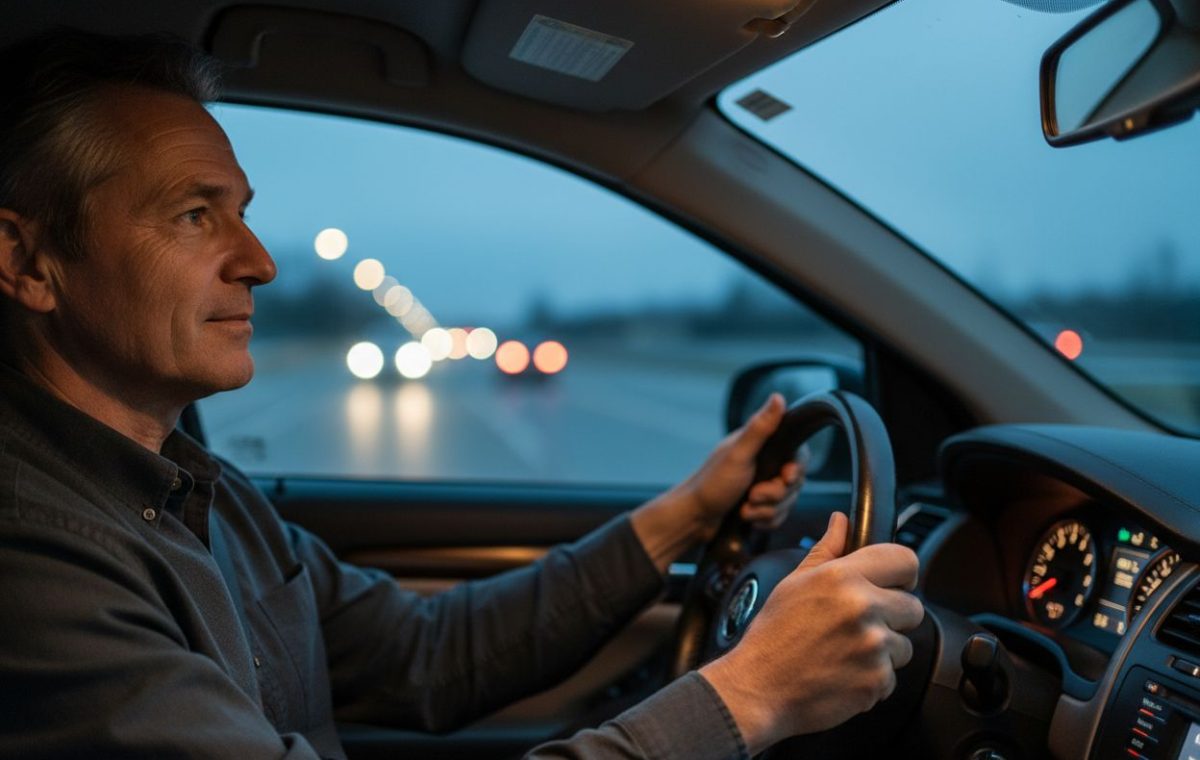
Most people do not announce that they have stopped driving at night. They just start saying no to dinner invitations across town. The reason is almost always the same. Oncoming headlights turn into starbursts, the lane lines fade, and the whole thing feels like a bad idea.
I’m not a doctor and I am not an eye doctor. But the reasons night driving gets harder as the years add up are well understood, and most of them have something you can do about them. Here is what is going on behind the windshield.
Your pupils let in less light than they used to
The first thing is simple. The muscle that opens your pupil gets a little lazier with age, so it does not open as wide in the dark. Research suggests the eye of a 60-year-old lets in a fraction of the light a 20-year-old’s does under the same conditions.
On top of that, the lens inside the eye slowly thickens and yellows. It scatters light instead of focusing it cleanly. That scatter is what turns a single headlight into a glowing blob with rays coming off it.
The macula is where the fine detail lives
At the back of your eye is the retina, and at the center of the retina is a tiny spot called the macula. It is about the size of the letter o on this page. Everything you see sharply, a road sign, a face, the words you are reading now, is being handled by that spot.
The macula is protected by a layer of yellow pigment that acts like a built-in pair of sunglasses, absorbing harsh blue light and cutting glare. That pigment is made from nutrients the body does not produce on its own. It has to come from food. As the years add up, and especially if the diet is short on the right greens, that pigment layer thins. Less pigment means more glare and slower recovery after a bright light hits you.
That recovery time is the part that scares people. When a truck’s high beams wash over you and it takes four or five seconds for the road to come back, that is the macula and the retina resetting. At 60 miles an hour, five seconds is a long way to drive half-blind.
About the carrots
Your mother told you carrots were good for your eyes, and she was partly right. Carrots carry beta-carotene, which the body turns into vitamin A, and vitamin A is needed for the retina to work in low light. If you were badly short of it, your night vision would suffer.
But most Americans are not short of vitamin A, and more of it does not give you better night vision once you have enough. The story got started as a wartime cover story for radar, and it stuck. The nutrients that actually build the macular pigment are different ones, found mostly in dark leafy greens, egg yolks, and orange and yellow peppers. Spinach and kale do more for the glare problem than a bag of carrots.
Five things to do before your next night drive
- Clean the inside of your windshield. The haze that builds up on the inside of the glass scatters light exactly like the lens in your eye does. Use a microfiber cloth and plain glass cleaner, and do the same to your glasses.
- Wear UV-blocking sunglasses in the daytime. This sounds backward, but daytime sun exposure is a major driver of the lens yellowing and the pigment loss that hurt you at night. Any pair labeled 100 percent UVA and UVB works.
- Look at the right edge of the lane. When headlights are coming, shift your eyes to the white line on the right shoulder and let the oncoming car pass in your side vision. Side vision is less bothered by glare, and the line keeps you in your lane.
- Aim your headlights. Headlights drift out of alignment over the years, and a lot of older cars are lighting up the trees instead of the road. Any shop can check it in a few minutes.
- Ask about anti-reflective coating. If you wear glasses, an anti-reflective coating on the lenses cuts the halos noticeably. It is not expensive and most optical shops offer it.
Get the dilated exam
This is the one that matters most. A dilated eye exam is where the eye doctor puts drops in to widen the pupil and looks directly at the retina and the macula. It is the only way to see what is going on back there.
Most of the things that quietly steal night vision as the years add up, including early cataracts and changes in the macula, do not hurt and do not announce themselves. They show up in that exam, often years before they show up in your driving. After 55, once every year or two is the usual recommendation. If it has been more than two years, make the call this week.
And if night vision changed suddenly, if you see flashes, a curtain, or a new blind spot, that is not a wait-until-next-year situation. Call the same day.
The short version
Night driving gets harder because the pupil opens less, the lens scatters more, and the macular pigment that cuts glare thins out. Carrots are not the answer, greens and UV sunglasses are closer to it, and a dilated exam is the only way to know what is really happening. If you want to go deeper on what the research suggests about feeding the macula as the years add up, I put it in one place.