What I’d Tell My Own Father About the Hospital Bill
Before you reach for the checkbook, there are two sentences to say on the phone, and my father never knew he was allowed to say either one.

My father kept his bills in a shoebox under the kitchen phone. Not a filing cabinet. A shoebox, the kind that once held a pair of work boots, with the lid cut off so he could see what was in it.
He paid everything in that box the week it came in. He was proud of that. I was proud of him for it. And it is exactly the habit that would have cost him dearly the first time a hospital bill landed in there.
He’s gone now, so I can’t have this conversation with him. But I’ve had it in my own head enough times that I know how it would go.
The scene
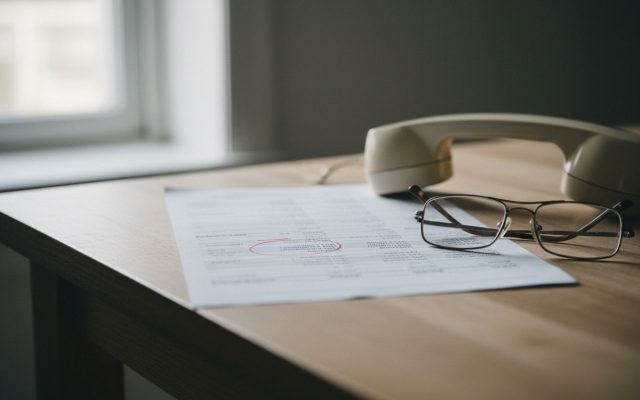
It’s a Tuesday. He’s at the table with his reading glasses pushed down his nose, a cup of coffee going cold, and an envelope with a hospital’s name in the corner. Inside is a single sheet. A date of service. A few lines, maybe three. “Emergency services.” “Pharmacy.” “Laboratory.” And a number at the bottom that makes him go quiet.
He’d reach for the checkbook. I’d put my hand on it.
“Dad. Don’t pay that yet.”
He’d look at me like I’d suggested skipping church.
“It’s a bill, son.”
“It’s a summary. It’s not the bill. We haven’t seen the bill.”
The first thing I’d tell him: ask for the itemized statement
What comes in the mail first is usually a summary. A few categories and a total. It tells you almost nothing about what you’re paying for.
The itemized statement is different. It lists every line: every pill, every bag of saline, every hour of a room, every item with a code next to it. You are entitled to ask for it. You don’t need a reason. You don’t need a lawyer. You call the number on the summary and say these words:
“I’d like the itemized statement for this date of service, please.”
That’s it. They may put you on hold or transfer you. Stay polite and stay put. You are not asking for a favor. You are asking for the receipt.
My father never once left a hardware store without checking the receipt against the bag. He’d have understood this immediately if someone had just told him he was allowed.
The second thing: read it like a hardware receipt
When the itemized statement arrives, it’s going to be long and it’s going to look like a foreign language. That’s fine. You don’t need to understand all of it. You need to look for three things.
First, things you don’t remember happening. A procedure you didn’t have. A medication you didn’t take. A day in a room you weren’t in.
Second, things that appear twice. The same item on the same day, billed twice, is more common than anyone would like to admit.
Third, things that seem oddly priced. A single over-the-counter tablet at a price that would buy the whole bottle. “Can you explain this line to me?” is a complete sentence.
I’d sit with him and a yellow highlighter and we’d go line by line. It would take an hour. He’d grumble. And somewhere around page three he’d find something, and the grumbling would stop.
The third thing: ask about financial assistance
Here’s the sentence I’d make him practice until it sounded natural:
“Do you have a financial assistance policy, and can you send it to me?”
Most hospitals, especially the nonprofit ones, have one. It’s often called charity care or a sliding scale. It can reduce a bill substantially or wipe it out, depending on income and circumstances. It is not reserved for people with nothing. Plenty of working families with insurance qualify and never find out, because nobody mentions it.
My father would have hated asking. He’d have felt it was taking something. I’d tell him what I believe: the policy exists because the hospital has decided, on paper, that some people shouldn’t pay full price. The only question is whether you’re going to let them decide you’re not one of those people without even looking.
Asking is not begging. Asking is reading the terms.
The fourth thing: the surprise-bill rules, in plain terms
A few years back, around 2022, federal rules kicked in that changed the ground under a lot of these bills. I’ll keep this general, because the details depend on your plan and your situation, and I’m not a lawyer any more than I’m a doctor.
The short version: if you had an emergency, or you went to a hospital that’s in your insurance network and somebody who treated you there wasn’t in the network, you generally can’t be billed the difference between what they charged and what your plan paid. That gap used to show up as a “surprise bill.” In many cases now, it isn’t supposed to.
If you’re paying out of pocket, you can generally ask for a good-faith estimate before a scheduled service, and if the real bill comes in far above it, you have a way to challenge it.
The rules have exceptions, like all rules. But the point for my father would be simple: a big number on a summary is not automatically a number you owe. There may be a rule standing between you and it. You won’t know unless you ask, and you won’t ask unless you stop reaching for the checkbook.
Why you never pay the first number
The first number is a starting position. Not because the people in the billing office are villains; most of them are working from a system they didn’t design. But that system produces a number that assumes you won’t look, won’t ask, and won’t wait.
So you look. You ask. You wait, politely, while they look too.
You can ask for a payment plan with no interest. You can ask whether there’s a discount for paying in full once the amount is correct. You can ask them to hold the account while the statement and the assistance application are reviewed, so it doesn’t go to collections meanwhile. Write down the date, who you spoke with, and what they said. My father would have done that on the back of the envelope. That counts.
The dignity of asking
My father believed that a man pays what he owes, on time, without complaint. That belief built a life. I’m not going to stand here and tell you it was wrong.
But there’s a difference between paying what you owe and paying what you’re handed. The first is dignity. The second is just being quiet. The system counts on the two getting confused, especially in people raised to be polite.
Asking for the itemized statement isn’t rude. Asking about the assistance policy isn’t weakness. It’s the same thing he did at the hardware store and the car dealership: he read it, and he asked.
So here’s what I’d tell him, if I could. Put the checkbook down. Pour another cup of coffee. Call the number and say the words. You’ll feel foolish for about ninety seconds. Then you’ll feel like yourself again.
And keep the shoebox. It was a good system. It just needed one more rule.