The porch, the grandkids, and a better cup of coffee
Nobody plans the best parts of the second half of life; they come from small rituals done well, and here is how to do four of them better.
Ask anyone who has made it past 45 what they would do over, and you rarely hear about the big things. The promotion, the move, the kitchen remodel. What they talk about is smaller. The coffee. The chair outside. The one grandkid who finally told them something real.
That is not an accident. As the years add up, the big events thin out and the small rituals carry more of the weight. So it is worth getting a few of them right. Here are four, with the actual details, because the details are where the pleasure lives.
Coffee: three things fix almost everything
Most home coffee is bad for three reasons, and none of them is the beans. It is stale grounds, water at the wrong temperature, and guessing at the ratio. Fix those and a nine-dollar bag of grocery-store coffee will beat most of what you have been paying five dollars a cup for.
Start with the grind. Coffee begins losing its aroma within minutes of being ground, which is why pre-ground coffee smells wonderful in the bag and tastes like cardboard in the cup. A hand grinder costs about what two weeks of drive-through coffee does. Grind right before you brew: medium for a drip machine, a little coarser for a French press.
Then the water. Boiling water scorches coffee and pulls out the bitter end of it. Water that is merely hot leaves it sour and thin. The sweet spot is around 195 to 205 degrees, which in practice means: bring the kettle to a boil, take it off the heat, count to thirty, then pour. No thermometer required.
Finally, the ratio. Most people underdose, wonder why the cup is weak, and then brew it longer and make it bitter. A reliable starting point is two level tablespoons of ground coffee for every six ounces of water. If you own a kitchen scale, use it: about one gram of coffee for every sixteen grams of water. Adjust from there, one notch at a time, until it tastes like yours.
One more thing. Rinse the carafe and the basket every single day, and run a vinegar-and-water cycle through the machine once a month. Old coffee oil goes rancid, and rancid is the taste most people blame on the beans.
A porch worth sitting on
The porch does not have to be big. It has to be comfortable enough that you actually go out there, which rules out most of the furniture people buy for porches.
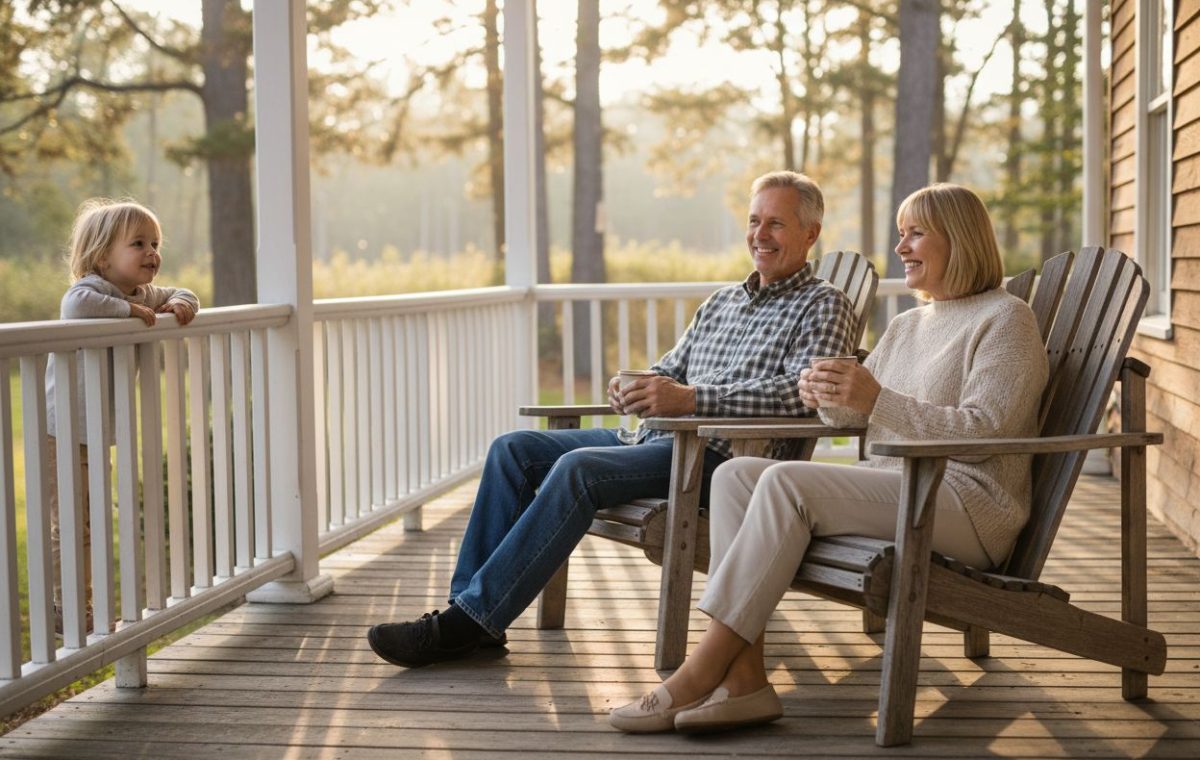
The test is simple. Can you sit in that chair for an hour with a cup of coffee and not shift around? If the answer is no, the chair is decoration. Look for a seat deep enough for your thighs to rest, arms at the height where your elbows land naturally, and a back that leans a few degrees. Adirondack chairs pass this test. Most wicker sets do not.
Then put a small table within reach of your right hand, so the cup is never on the floor. Add one light that is warm rather than blue-white, because nobody lingers under a floodlight. And if the porch faces the street, angle the chair so you are looking at the street at a slant rather than head-on. It is the difference between watching the neighborhood and being watched by it.
Morning on the porch is the easiest ritual to keep because it costs nothing and requires nobody else. Fifteen minutes before the house wakes up, with the coffee you now know how to make, is worth more than most of what you could buy.
The one question that gets grandkids talking
Every grandparent knows the conversation. How was school? Fine. What did you do? Nothing. You get three words and a shrug, and then they are back to the screen.
The problem is not the kid. It is the question. Yes-or-no questions, and questions that ask them to summarize an entire day, are exhausting to answer. They would be exhausting for you too.
Try this one instead: What is something that happened this week that surprised you? It cannot be answered with one word. It asks about something specific. And it gives them permission to tell you about anything, from a fight with a friend to a dog they saw at the bus stop.
The trick is in the follow-up. Whatever they say, your only job is to ask one more question about it. Not advice. Not a story about when you were their age. Just: And then what happened? Or: What did you think about that?
Some other questions that work the same way:
- What is the best thing you ate this week?
- Who made you laugh lately?
- If you could change one rule at school, what would it be?
- What is something you are good at that most people do not know about?
- What is a song you have been playing over and over?
Ask one. Not all five. A kid who feels interviewed will shut down faster than one who feels ignored. And the car is the best place for this, because nobody has to make eye contact.
Why Sunday dinner survives everything
Families scatter. Kids move two states away, grandkids get weekend sports, somebody is always working. And yet, in family after family, the one thing that keeps going is a regular meal at the same table on the same day.
It works because it is a standing appointment, not an invitation. Nobody has to decide whether to come. They just know that at five o’clock on Sunday there will be food, and the door will be open. Invitations get declined. Standing appointments get kept.
It also works because the meal itself does not matter much. The families that keep Sunday dinner going for decades are not roasting a leg of lamb every week. It is spaghetti. It is chili. It is a rotisserie chicken from the store and a bag of salad, and nobody has ever complained.
Keep the time fixed and the menu loose. Let people bring something if they want to, and let them bring nothing if they do not. Do not keep score on who shows up. The grandkid who skipped eight Sundays in a row will walk in on the ninth, and the whole point is that the table is still there when they do.
Put the phones in a basket by the door. Not as a punishment, just as the house rule. Within three weeks nobody will think about it.
And when it is over, let the people who want to linger linger. The dishes can wait. The porch is right there, and you still have the coffee.
The sum of small things
None of this is a program. Nobody needs a checklist for sitting on a porch. But it is worth noticing that a good life after 45 is mostly made of ordinary moments done with a little care, and that the care is the part you control.
Grind the coffee. Fix the chair. Ask the better question. Set the table on Sunday. That is most of it.