Ten minutes in the garden beats the gym
The best exercise after 45 is the one you keep doing, and for a lot of people that turns out to be a trowel, not a treadmill.
Every January the gym fills up. By March it has emptied out again, and the people who left are not lazy. They just never liked it. Nobody keeps doing a thing they hate for long.
Gardening is different. People garden for forty years. They do it with bad knees and sore backs and a hip that was replaced in 2019. And while they are out there, they are getting more real exercise than most of them realize. Here is the case for it, and how to do it without wrecking the parts of you that have already taken a beating.
What it actually works
An hour of ordinary gardening, the kind with digging, weeding, hauling, and bending, is moderate exercise by most reasonable measures. It is in the same neighborhood as a brisk walk, and some parts of it, like turning soil or moving bags of mulch, are closer to a session with weights.
What makes it better than the treadmill is the variety. You squat to pull a weed. You carry a watering can, which is a weighted walk. You reach, twist, kneel, stand, and push a wheelbarrow. That is strength, balance, flexibility, and grip, all in one morning, and all of it is the kind of movement that keeps you steady on your feet as the years add up. Grip strength in particular tends to fade quietly, and a garden is a grip machine you never have to think about.
You are outside, in daylight, with your hands in dirt, making something. People who garden tend to come back in calmer than they went out.
How not to wreck your back and knees
The injuries in the garden are almost never dramatic. They are the slow kind: a back that aches for three days after a weekend of bending, knees that complain after an hour on hard ground. The fix is to stop fighting the ground.
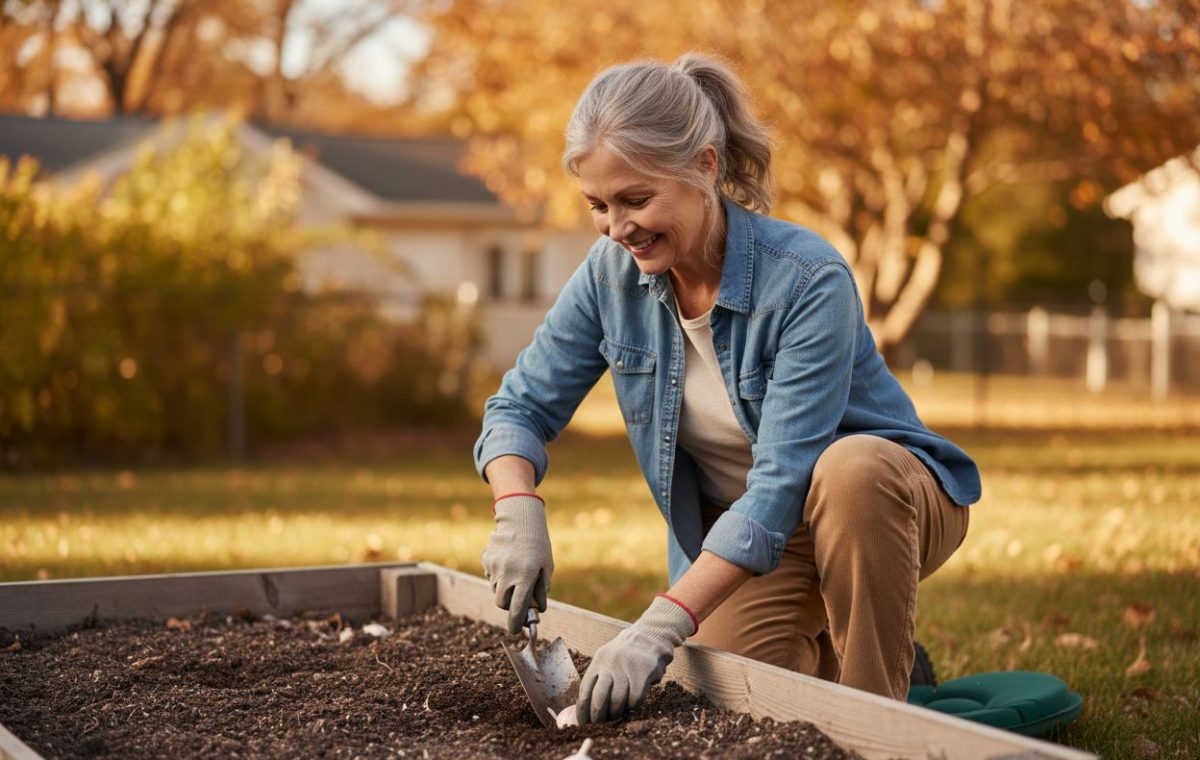
Raised beds are the single best investment. A bed that is 24 to 30 inches tall brings the soil up to where your hands are when you are sitting on a stool or standing with a slight lean. No bending to the ground and no kneeling. A simple one out of cedar boards costs less than a couple of months of gym membership, and a galvanized stock tank from the farm store, with holes drilled in the bottom, works just as well.
For anything at ground level, use a kneeler. The good ones are a padded platform with handles on either side, so you kneel on the pad and push up on the handles to stand. Flip it over and it is a bench. That one tool turns the hardest part of gardening, getting back up, into something your arms help with.
And get the right trowel. Most cheap trowels have a thin straight handle that forces your wrist to bend sideways, which is why your hand aches after an afternoon of planting. Look for one with a thick, slightly angled handle, a sharp stainless blade, and some weight to it.
A few more habits that save your joints. Work in twenty-minute stretches and change the task each time, so you are not bending for an hour straight. Lift bags of soil the way you would lift a toddler, close to the body, with the legs. Water in the morning and plant in the evening when it is cooler. And stop while you still feel good, because the ache shows up tomorrow, not today.
Ten minutes is enough
Ten minutes a day is more than most people spend on any exercise, and it is a realistic amount for a garden. Pull weeds on Monday. Water and deadhead on Tuesday. Plant something on Wednesday. Over a week it adds up to more than an hour of real movement, and you never had to drive anywhere.
If you already have a garden, treat it as a daily appointment rather than a weekend project. If you do not, start with one raised bed and one kneeler. That is the whole setup.
What to plant in the next 30 days
It is early October. Here is what goes in the ground now, by region. Check your local first-frost date, which your county extension office posts for free.
- Northeast and upper Midwest: garlic cloves for next summer, spring bulbs like tulips and daffodils, and a cover crop of winter rye on any bare bed.
- Mid-Atlantic and lower Midwest: garlic, spinach and kale under a row cover, bulbs, and bare-root trees and shrubs once the heat breaks.
- Southeast and Gulf Coast: this is your second spring. Lettuce, collards, broccoli, carrots, radishes, and sweet peas all go in now.
- Texas and the Southwest: cool-season greens, onions from sets, cilantro, and wildflower seed for a spring show.
- Pacific Northwest: garlic, fava beans, overwintering onions, and bulbs. Get them in before the rains settle in for good.
- California coast: almost anything cool-season. Lettuce, peas, brassicas, and native perennials, which establish best in the fall.
- Mountain West and high plains: garlic and bulbs, and that is about it. Mulch everything else and plan for April.
The point is not the harvest, though the harvest is nice. The point is that you will be out there every day, bending and lifting and carrying, long after the gym has stopped charging your card.