Almost Nobody Panicked in 1938. The Few Who Did Had One Thing in Common.
The War of the Worlds hysteria was mostly invented by newspapers. The real mechanism behind the few genuine scares is running against Medicare recipients right now.
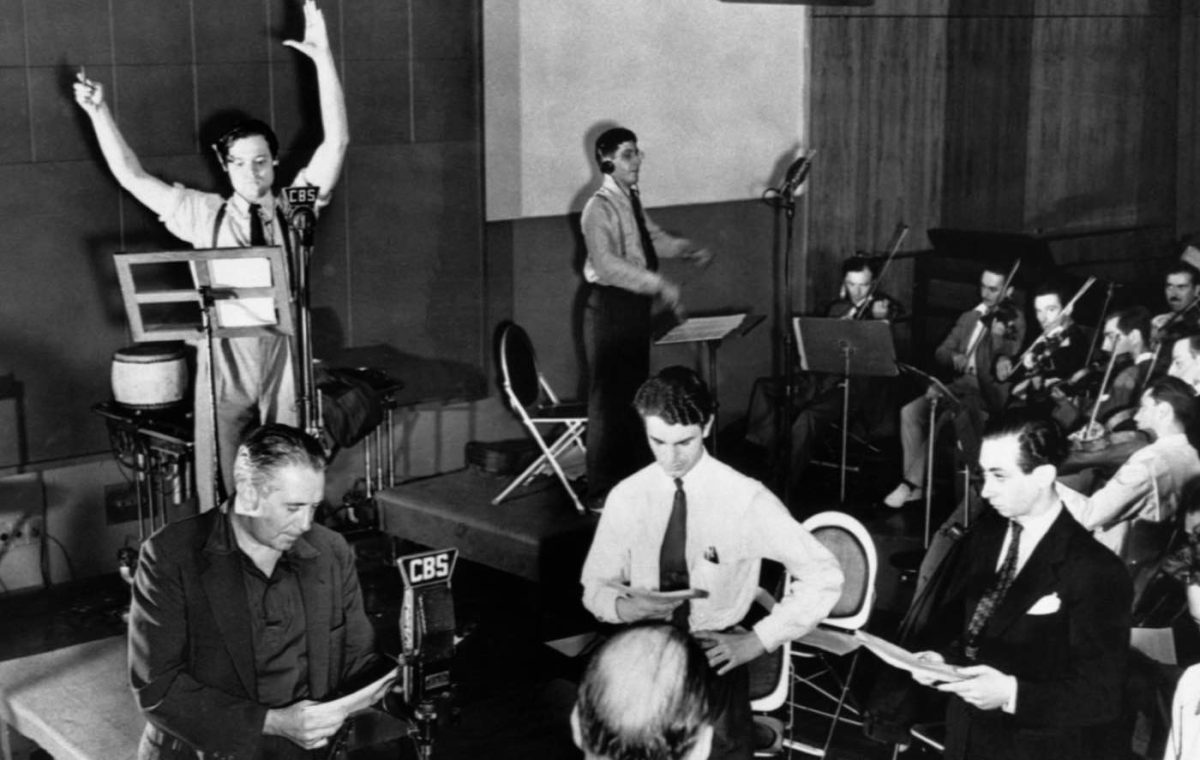
On the evening of October 30, 1938, a 23-year-old Orson Welles went on CBS with a Mercury Theatre adaptation of The War of the Worlds, staged as a series of news bulletins interrupting a program of dance music.
Everyone knows what happened next: a nation in the streets, highways clogged with refugees, switchboards melting, America humiliated by its own gullibility.
Almost none of that is true.
The panic was largely manufactured
Roughly two percent of the radio audience was tuned to CBS that night. The overwhelming majority of the country was listening to Edgar Bergen on NBC, as it did every Sunday. Surveys taken shortly afterward found that listeners, in large majorities, understood perfectly well that they were hearing a play.
In a nation of about 130 million people, media historians working through the actual records have had difficulty documenting more than a few dozen who were frightened enough to leave their homes.
So where did the legend come from? Largely from newspapers, which printed it with enthusiasm the following morning and for years afterward. Radio was at that moment taking advertising revenue away from print at an alarming rate, and the newspaper industry had a direct commercial interest in the proposition that radio was reckless, unaccountable and dangerous to the public.
The famous lesson of 1938 — that people will believe anything — is itself the fabrication. Which is useful to know, because the real mechanism is much narrower, considerably more interesting, and still working.
What the few who were frightened had in common
The people who were genuinely scared were, for the most part, people who tuned in late.
Welles opened the hour with a clear announcement that this was a dramatization. If you heard it, the illusion never had a chance. But a large number of listeners switched over partway through — many of them during a commercial break on the Bergen program — and arrived in the middle of what sounded exactly like a breaking news bulletin, read in the cadence of a breaking news bulletin, on a network they had every reason to trust.
They were not stupid. They were missing the frame.
That is the mechanism: a trusted format, delivered to someone who came in partway and does not have the context. It has nothing to do with gullibility, and it cannot be defended against by being a skeptical person, because nothing about the content is implausible.
Why this is the worst Medicare fraud season in years
Here is the current application.
The phone call going around this fall says, in some variation: your Medicare Advantage plan has been cancelled, and we need to verify your information to get you re-enrolled before coverage lapses.
In most years that is a thin story, because most years most plans are quietly renewed and the claim collapses under the slightest scrutiny.
This year it is the news. Roughly five million people are being moved because their plan was cancelled or pulled out of the county where they live. Insurers are exiting markets they have decided are unprofitable. By one analysis, 638,000 people in nearly 200 counties will have no Medicare Advantage plan available at all in 2027. The average number of plans on offer has fallen to about 35, from 39.
Anyone who has watched the evening news in the past three weeks has heard that plans are being cancelled. What they have not been told is whether theirs is one of them.
The caller supplies that missing piece, in the format of an official notification, to someone who already knows the general thing is true. It is the same structure as a man turning the dial at the wrong moment in 1938, and it works for the same reason.
You cannot defend this on the content
This is the part we want to be emphatic about, because the standard advice is actively unhelpful here.
“Be suspicious if it sounds too good to be true” does not apply. Nothing about this sounds too good to be true. It sounds like a problem, and it sounds like a problem that is actually happening to five million of your neighbors.
The defense is not the story. It is the channel.
Medicare does not telephone you to ask for your Medicare number, because Medicare already has it. A plan that is leaving your county tells you in writing — the Annual Notice of Change, which every plan is required to mail by the end of September — and that letter does not ask you to confirm the number printed on the card they issued you.
No legitimate party in this process needs you to read them a number over the phone to a call you did not place.
One thing to do this week
Adopt a single rule and apply it without judging the individual call: hang up, then dial it yourself. The number on the back of your card, or 1-800-MEDICARE. If the problem is real, the people you reach will know about it. If it is not, you have learned that in ninety seconds and lost nothing.
Tell one other person the rule, preferably someone who lives alone. The calls are not distributed randomly; they concentrate where nobody else is in the room to say “that’s strange.”
And if something was already said on a call that shouldn’t have been, the next Medicare Summary Notice is where it will show up. Read it line by line for services you do not remember receiving, and report what you find to 1-800-MEDICARE.
Welles’s listeners were fine if they heard the beginning. The ones who got hurt were the ones who came in partway. Nearly ninety years later, that is still the whole of it.